
Best Dental Staffing Software for Dental Practices in 2026
- Mar 9
- 6 min read

Ask almost any dental practice manager what keeps them up at night, and staffing will usually come up within the first few minutes.
A hygienist calls out sick.
A dental assistant resigns with two weeks’ notice.
Patient demand suddenly increases.
None of these situations is unusual. In fact, they’re fairly routine across the industry.
What’s difficult is not finding professionals; it’s coordinating everything required to get someone ready for a shift quickly.
That means confirming schedules, checking credentials, completing onboarding paperwork, and making sure compliance requirements are met.
For years, most dental practices and staffing agencies managed these steps using whatever tools they had available: spreadsheets, shared folders, email threads, and a lot of phone calls.
Today, more organizations are turning to dental staffing software to handle these workflows in a more structured way.
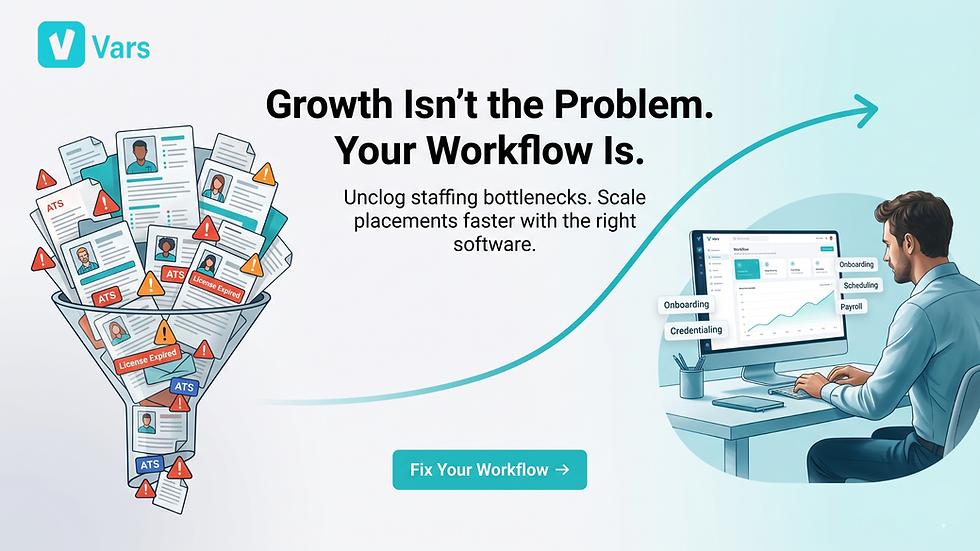
Instead of juggling several disconnected systems, teams can manage recruiting through an applicant tracking system, credentialing, scheduling, and deployment from a single platform
And for agencies placing dozens, sometimes hundreds, of dental professionals each month, that difference can be significant.
Why Dental Practices and Staffing Agencies Are Turning to Dental Staffing Software
The dental workforce has changed over the past decade.
Many hygienists and assistants now prefer flexible work arrangements, which means temporary placements are more common than they used to be.
At the same time, dental practices often need short-term coverage for situations like:
Maternity leave
Seasonal patient demand
Unexpected staff absences
Extended hiring timelines
Staffing agencies typically step in to help fill those gaps.
But as the number of placements increases, the operational complexity increases too.
A small agency might manage candidate records in spreadsheets and schedule shifts manually. That approach can work at least for a while.
The challenge appears when the agency starts supporting multiple clinics and a larger talent pool.
Recruiters spend more time searching for documents.
Operations teams struggle to keep track of certifications.
Scheduling errors occasionally slip through.
Dental staffing software attempts to bring these scattered processes together so they’re easier to manage.
Key takeaway for practice owners
The biggest advantage is not just automation. It’s reducing the time it takes to move a professional from “available” to “ready to work.”

How Dental Practices Manage Scheduling Without Dedicated Staffing Tools
Scheduling tends to be the first pain point most agencies notice.
At a glance, assigning someone to a shift might seem straightforward. In reality, several pieces must line up before that can happen.
For example:
The professional must be available
Their credentials must be valid
Onboarding paperwork must be complete
The location and schedule must match their preferences
Many staffing agencies still manage this coordination through a combination of:
Excel sheets
email confirmations
text messages to candidates
When placement volume is low, this approach is manageable.
Once staffing activity grows, however, recruiters can spend hours simply coordinating availability and confirming details.
One agency operations manager once described their process like this:
“Half our day was spent chasing information. We weren’t short on candidates, we were short on visibility.”
That’s where dental team scheduling software begins to make a difference.
Instead of manually contacting each candidate, agencies can:
Publish available shifts instantly
Identify professionals who meet credential requirements
Notify candidates automatically
Confirm assignments within minutes
Some systems also allow professionals to accept shifts directly through a mobile app, which speeds up response times.
Common operational mistake
Scheduling often gets the blame for delays, but the real bottleneck is frequently credential verification and onboarding readiness.
What Features Actually Matter in Dental Staffing Software
Not all staffing platforms solve the same problems.
Some focus mainly on recruiting, while others support the full staffing lifecycle.
For dental staffing agencies, the most useful systems usually cover multiple stages of the workflow.
Typical operational steps include:
Recruiting professionals
Collecting onboarding documentation
Verifying credentials using staffing compliance software
Assigning shifts
Tracking hours worked
Processing billing and payments through payroll and billing software
When these steps happen across several tools, coordination becomes more complicated.
Below are some features agencies typically look for when evaluating dental staffing software.
Feature | Operational Benefit |
Organizes candidate pipelines and applications | |
Credential Tracking | Ensures licenses and certifications remain current |
Scheduling Tools | Assigns professionals to shifts efficiently |
Onboarding Workflows | Collects contracts and required documentation |
Communication Tools | Keeps recruiters, candidates, and clinics aligned |
Payroll and Billing | Converts completed shifts into payments and invoices |
Reporting | Provides insight into staffing activity |
Pro tip for staffing agencies
If your scheduling system and credential records live in different tools, delays tend to show up quickly, especially as the organization grows.
Why Deployment Delays Happen in Dental Staffing Agencies
Many staffing leaders assume recruiting is their biggest challenge.
In reality, the problem often appears after a candidate is already identified.
Consider what happens once a recruiter finds a suitable hygienist for a shift.
Before a professional can work, several checks still need to happen:
Licenses must be verified
Certifications must be current
Onboarding documents must be completed
Compliance records must be reviewed
When agencies track these details manually, mistakes are easy to make.
Some operations teams attempt to manage credential records using spreadsheets or shared folders. That works initially, but it becomes difficult to maintain as the number of professionals increases.
Platforms like Join Vars are designed to address exactly this part of the workflow.
Instead of switching between different systems, agencies can manage:
Candidate onboarding
Credential verification
Scheduling
Time tracking
Payroll and billing
Within one operational environment.
For many teams, the result is faster shift fulfillment and fewer last-minute complications.
How Software Improves Dental Hygienist Recruitment
Dental hygienists remain one of the hardest roles to recruit across the industry.
But recruitment challenges aren’t always about supply.
Sometimes the hiring process itself introduces friction.
Candidates may lose interest if:
Applications are lengthy
Communication is slow
The shift information is unclear
Staffing software can reduce these barriers.
Recruiters are able to:
Distribute job opportunities quickly
Maintain organized candidate records
Communicate through centralized messaging
Notify professionals about relevant shifts
Some systems even use AI candidate matching to suggest professionals based on skills and availability.
Key takeaway for recruiter leads
The easier it is for professionals to move from application to available shifts, the more likely they are to remain active in your talent network.
How to Choose Dental Staffing Software for a Dental Office or Agency
Selecting a staffing platform should involve more than comparing feature lists.
It’s helpful to first look at how your team currently manages staffing operations.
Questions worth asking include:
Where do scheduling delays usually occur?
How are credentials tracked today?
Which tasks take the most manual effort?
Once those answers are clear, evaluating software becomes easier.
Here are several areas most agencies consider.
Workflow Coverage
The platform should support multiple steps of the staffing lifecycle, including recruiting, onboarding, credentialing, scheduling, and billing.
Fragmented tools tend to create operational gaps.
Compliance and Credential Tracking
Dental staffing involves strict documentation requirements. Systems that track license expirations and certification status can help prevent last-minute issues.
Scheduling Visibility
Both agencies and clinics benefit from being able to view available professionals and confirm shifts quickly.
Operational Reporting
Insights such as time-to-fill shifts or recruiter productivity can help leadership teams improve staffing efficiency.
Payroll and Billing Integration
When timekeeping connects directly to billing workflows, revenue cycles tend to run more smoothly.
Best Dental Staffing Software for Small Dental Practices
Small dental practices often have simpler staffing needs than large agencies.
However, they still benefit from tools that make it easier to:
Request temporary professionals
Confirm shift coverage
Communicate with staffing partners
Many modern staffing platforms allow practices to view available professionals and request coverage through web or mobile interfaces.
For staffing agencies serving multiple clinics, platforms such as Join Vars help manage recruiting, credentialing, scheduling, and billing in one centralized system.
FAQ's
Best dental staffing software for small dental practices?
Small practices benefit from systems that simplify shift scheduling and communication with staffing partners. Platforms that allow quick shift requests and confirmations help reduce disruptions when staff are unavailable.
What are the essential features of dental office staffing software?
Common features include applicant tracking, credential management, scheduling tools, onboarding workflows, communication capabilities, and payroll or billing integration.
How to choose dental staffing software for a dental office?
Look for platforms that support the full staffing workflow while also improving scheduling visibility and compliance tracking.
How does specialized software improve dental hygienist recruitment?
By simplifying applications, improving communication, and making shift opportunities visible to qualified candidates.
Best dental staffing software for temporary and permanent placements?
Systems that support both shift-based scheduling and long-term candidate pipelines are best suited for agencies managing mixed placement models.
Final Thoughts
Staffing challenges in dental care are unlikely to disappear anytime soon. Clinics continue expanding services, professionals increasingly seek flexible schedules, and patient demand fluctuates throughout the year.
For dental practices and staffing agencies alike, the organizations that adapt best usually focus on improving operational workflows.
That may begin with something simple mapping how candidates move from application to deployment.
Once those steps are visible, it becomes easier to identify where delays occur.
At that point, implementing dental staffing software can help bring structure to the process and reduce the time required to place qualified professionals in the roles where they’re needed most.
Sometimes the biggest operational improvement isn’t hiring more recruiters.
It’s giving the team better tools to manage the work they’re already doing.


Comments